
Description
The air in the Portobello Road market was a thick soup of diesel exhaust, damp wool, and the unmistakable vinegar tang of frying fish. It was raining, of course. The kind of relentless London drizzle that finds its way past the collar of your trench coat and stays there.
I was inspecting a stack of waterlogged leather-bound journals when I saw her.
She wasn’t looking at the books. She was staring at a cardboard box under a rusted iron table, her fingers nervously tracing the lapel of an old sheepskin coat. She was sharp—the kind of woman who reads international wire reports for breakfast. And then, she moved on, leaving the box behind.
I stepped closer.
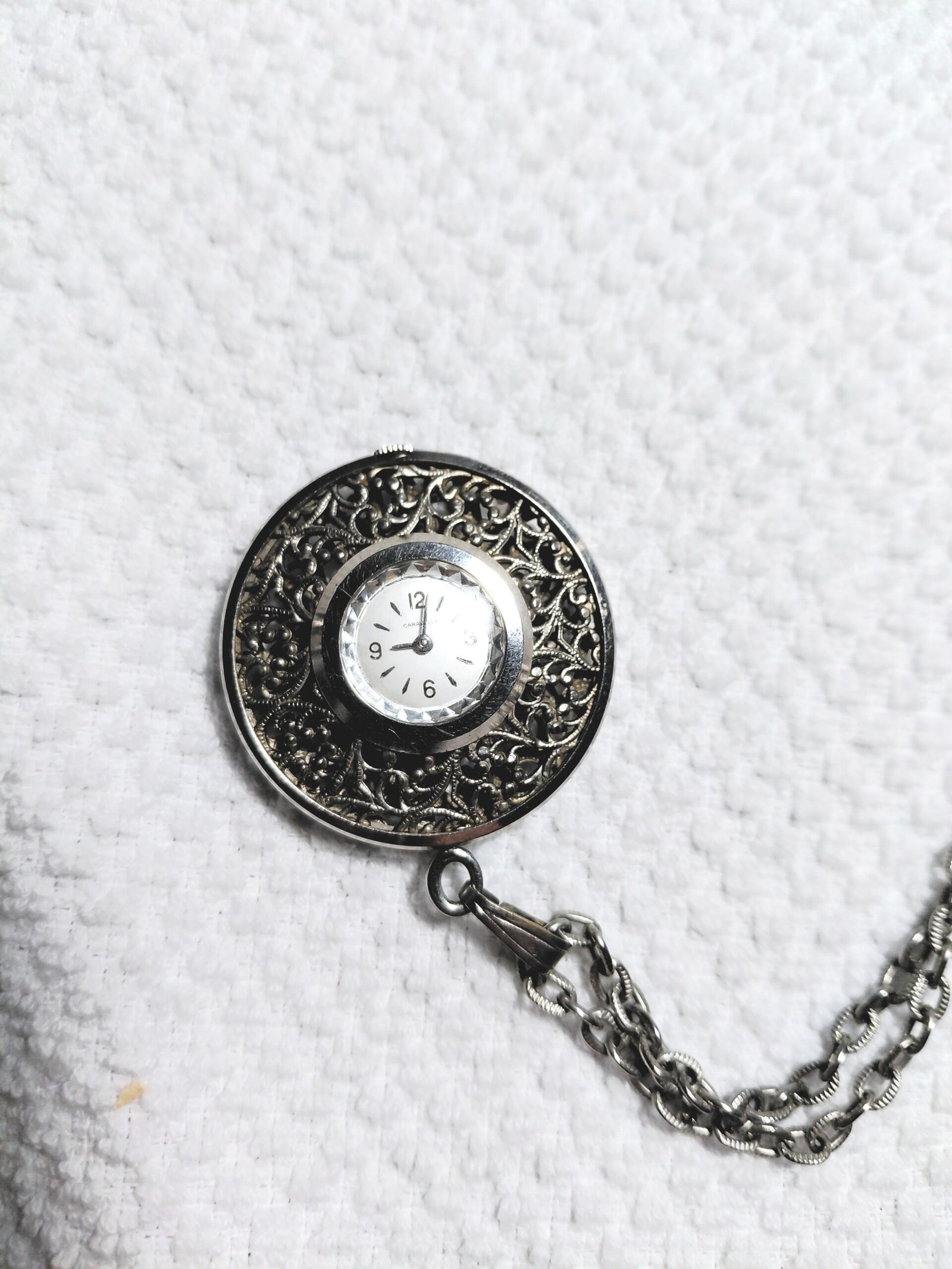
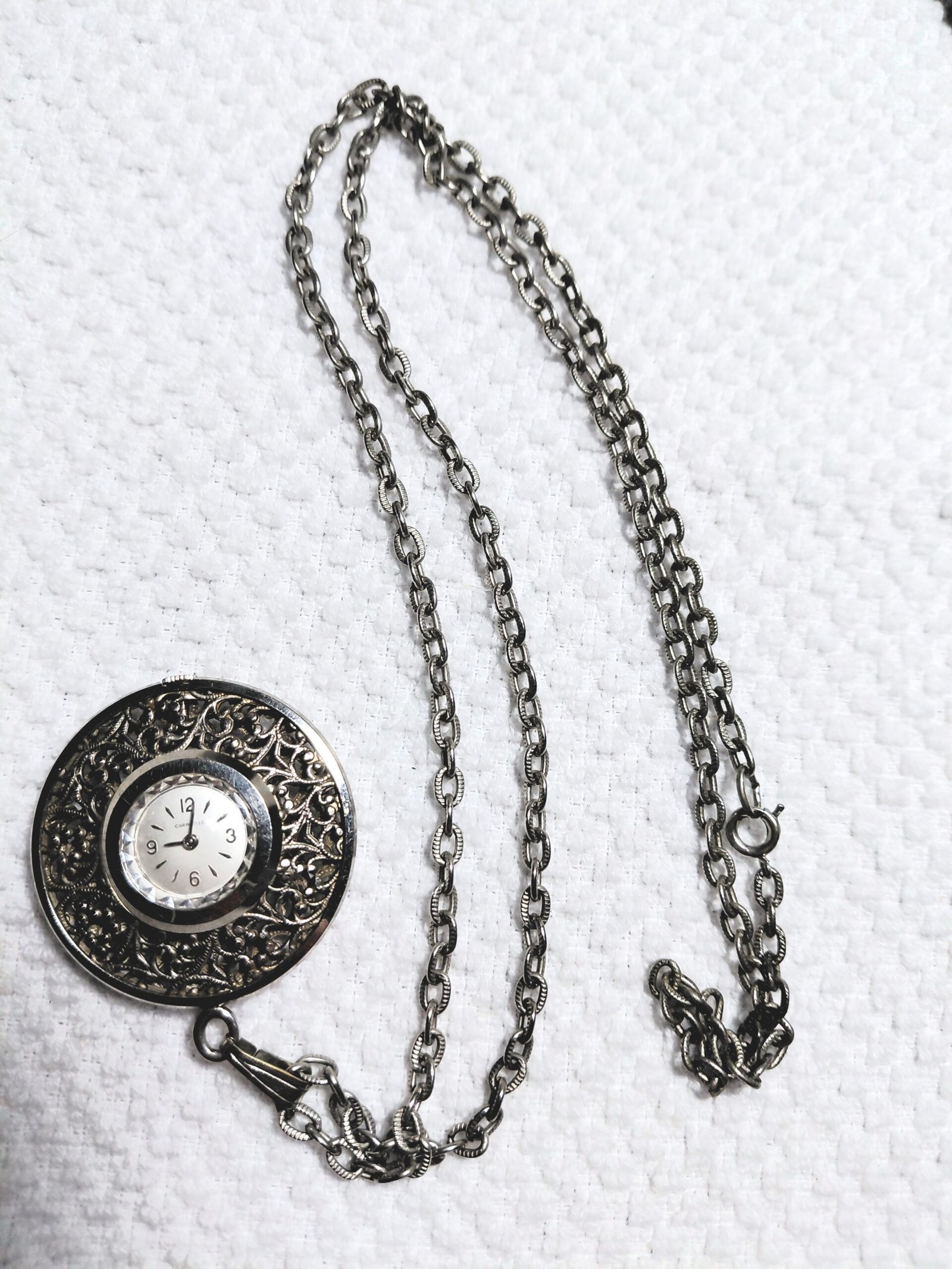
Inside, nestled between a broken brass sextant and a stack of 1974 transit maps, sat the medallion. It was a vintage silver-tone Caravelle.
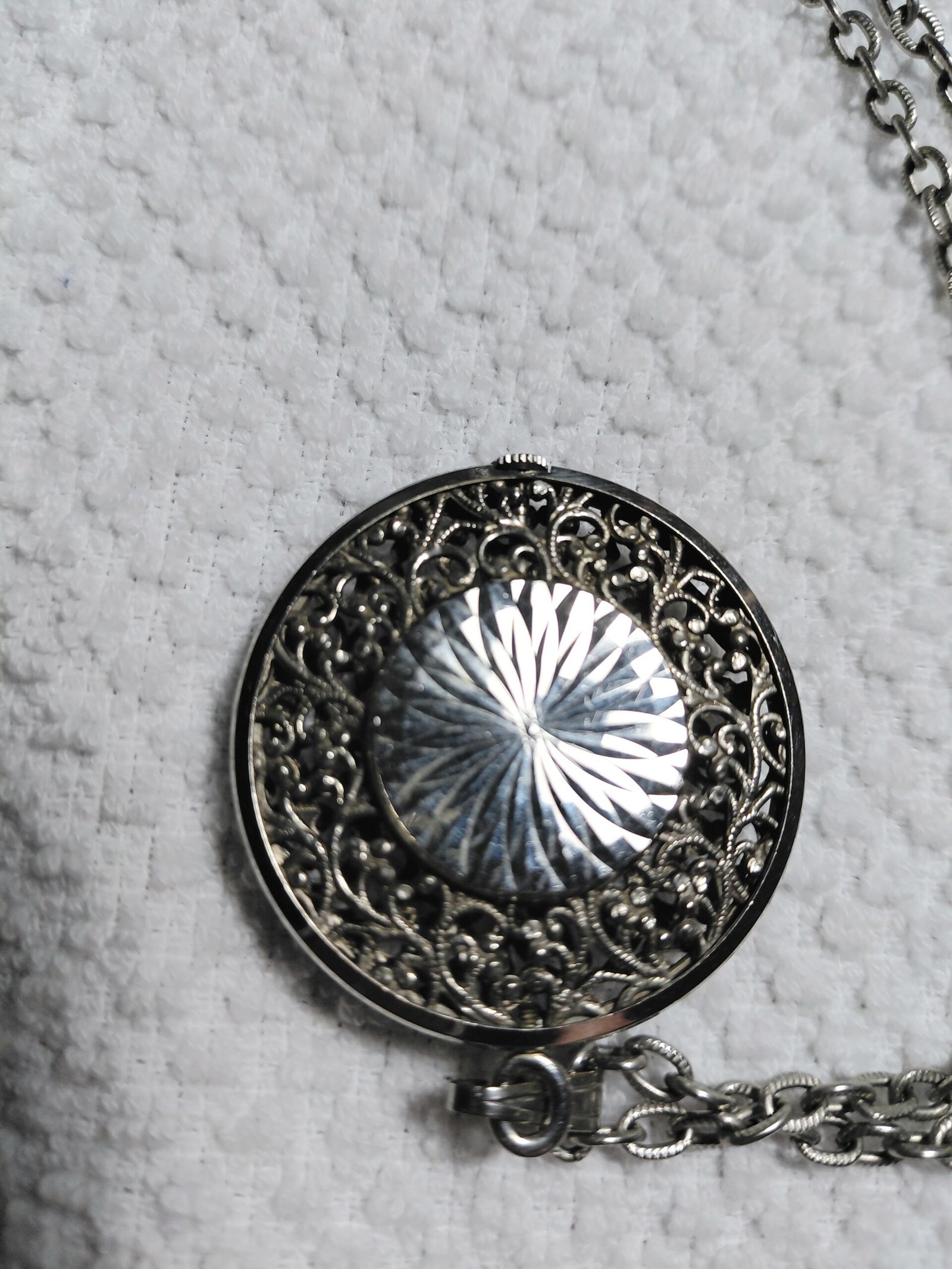
It didn’t belong in a cardboard box. It belonged on a midnight train to Vienna. The intricate openwork filigree was caked in fifty years of market grime, but beneath the dust, the floral scrollwork caught the weak British light like a secret.
I picked it up. Heavy. Substantial. The chunky silver-tone chain pooled in my palm like liquid mercury. I gave the tiny crown two gentle turns.
Tick. Tick. Tick.
The mechanical heart inside that little Swiss movement didn’t care about the passage of decades, or the damp cold, or the fact that it had been forgotten. It just wanted to run.
I paid the vendor three crumpled ten-pound notes. He didn’t look up. I slipped the chain over my head, feeling the cold weight of the medallion settle against my chest.
Some things aren’t just tools for keeping time. They are anchors to an era when people still wrote postcards, took the long route, and understood that elegance is always worth the weight.
The Caravelle Pendant Watch. It’s not just a timepiece. It’s a ticket back.
Reviews
There are no reviews yet.